
Boundaries & the Boundless Heart

“There’s respecting first your own boundless heart, its wish to connect and a respect for your own limits and the limits of others. It’s tender work that with time brings ease. I know this from my own experience.”

Here’s an audio version of this blog post.

There’s a premium placed on healthy boundaries. Boundaries are necessary because there are people who wreak havoc in our lives. And boundary setting is only one part of the skillful means required in our relationships. Clear boundaries help us to respect our limits. There are people we must keep a safe distance from and often times they are some of our closest people.

That’s not a moral failure, it is a dilemma for many.

Boundary setting can be conflated with a closed heart which causes confusion when we are challenged by a family member or close friend. We don’t want to cut off from someone yet at the same time, there’s the sanity of a boundary that is necessary. And sometimes, there are people we must close the door on completely, that is important to name. And yet, closing a door doesn’t mean we close off from the boundlessness of our own hearts or theirs: somewhere behind all their confusion is a boundless heart.

What I’ve come to learn and continue to learn is that setting a boundary doesn’t mean I am cut off from my own boundless heart or the boundless heart of anyone else. It’s a practice of discernment.

If we listen to our body, it will tell us where we are on the spectrum between boundlessness and boundaries. With time and awareness practices, we come to know the difference between when we are shutting down or when we are in the space of “both/and” which is a place where our hearts are open and our boundaries are clear.

Shutting down is part of the learning curve so go gently with yourself. It doesn’t mean you are doing anything wrong, you are learning and most of us have not been educated as to how to remain open and yet keep ourselves safe.

There’s respecting first your own boundless heart, it’s wish to connect and a respect for your own limits and the limits of others. It’s tender work that with time brings ease. I know this from my own experience.


Navigating Uncertainty

“If you are open to fine distinctions, you can observe that something in you knows the way home, slow as it may be, it returns you to the center of itself.”

An audio version of this blog post can be found here.

This quote above from Ruthy Alon, a late and great Feldenkrais somatic movement teacher, is a favorite of mine. It points to the radical trust required to make our inner journeys and not just the journey-ing itself but also trust that each step, each movement forward or back is part of the larger mosaic of our life. We are by nature meaning making creatures. We are also creatures that when faced with uncertainty regress into what’s known. Our growth is a few steps backwards and a few steps forward.

“The willingness to consider possibility requires a tolerance of uncertainty.”

We are beings who crave certainty tossed into a universe that offers none. The quote above from Rachel Naomi Remen points to our working edge: it invites curiosity about how to open to those “fine distinctions”. It’s key to living authentically. A life that Ruthy Alon would say includes having a “better tuned instrument for playing your song of life.”

“Recover & Restore” a 3 part course on Insight Timer!

It’s my wish to introduce you to new ways of sensing, feeling, thinking, moving, and acting that expand what’s possible for you in body, mind, brain, and emotional heart: embodied guidance for finding your way forward in a way that is kind, compassionate, and effective.

Keeping Our Balance

An audio version of this blog post is here.

“Your hand opens and closes, opens and closes. If it were always a fist or always stretched open, you would be paralyzed. Your deepest presence is in every small contracting and expanding, the two as beautifully balanced and coordinated as birds’ wings.”

Rumi’s quote offers a beautiful insight about the dynamic nature of balance. Balance includes both opening and closing, exertion and rest. It’s important to recognize that there’s a continuum of possibilities between open and close. This is part of what Rumi is talking about here–your deepest presence is in every aspect of the movement itself.

Your whole being is conveyed in every gesture that you make.

This kind of exploration is delicate, deliberate and requires a quiet sensitivity to ourselves. You can learn to listen for your own open and closing via this guided somatic audio.

Reclaiming these rhythms is restful. The potency of our exertion depends upon the depth of our rest. One student I worked with recently said to be able to give herself the permission to rest was profound. What a curious world we live in that we need such permission!

Need Support in finding your balance? Reach out! 

Be Well, Meg

Softening the Belly Meditation

As we move through each of the days that make up our lives, it’s essential to make time to pause. It’s good to check in with yourself and see how you are faring. Is it easy for you to relocate your center…has empathic distress gotten the better of you?

There’s plenty to be concerned about in our world and it’s essential that we pull back, take a breath. If that suggestion seems out of touch then I’d ask you how does it serve for you or me to be in ongoing empathetic distress? Brain science and neuroscience have proven that focused breathing and consistent rest slows down our trauma and trigger responses.

Take rests as much as you can: even between breaths there’s a rest. The turmoil we are in will last for some time to come so it’s wise to know ourselves and pace ourselves.

The message from the famous Oracle at Delphi is “know thyself” and “nothing in excess”. This is timeless guidance for our world today.

Listen in for 10 minutes.

Knowing Yourself Whole

An audio version of this blog post is here.

“Self help books (or videos) are like car repair manuals: you can read them all day but doing so doesn’t repair anything. Working on a car means rolling up your sleeves and getting under the hood, and you have to be willing to get dirt on your hands and grease beneath your fingernails. Overhauling emotional knowledge is no spectator sport; it demands a messy experience of yanking and tinkering that comes from a limbic bond. If someone’s relationships today bear a troubled imprint, they do so because an influential relationship left its mark on a child’s mind. When a limbic connection has established a neural pattern, it takes a limbic connection to revise it.” “A General Theory Of Love” Lewis, Amini & Lannon, MDs

In the past few weeks I’ve received emails, listened to clients or read articles filled with despair: people seeking to be free of suffering. There’s been an uptick in the wish to get free, along with frantic searches. In the process they’ve read every self help book or viewed videos across the internet. And they’ve come up with a painful hodgepodge of self diagnosis. I call it “painful” because the self diagnosis is based on just enough psycho emotional knowledge to deem themselves as insufficient. There’s not a shred of self compassion: after all why else would they still be in psychic or physical pain, they must be failing in their quest!

What propels our quest too often is the assumption we are not enough and that we live in a reward and punishment system.

Once the pain in our lives has reached a crescendo, it often spurs us to begin our search and that is good. What’s also good is that we stop our search somewhere. Just. Stop. It’s good to give ourselves a place to land. It’s good to also appreciate that each method, technique or “life hack” has its strengths and limits. At different times we need different kinds of support but to avoid committing altogether is also a form of suffering. When we recognize that, we could then commit ourselves to going deep rather than going wide. The process of healing remains the same as it always has: “the way through, is in”.

At some point in our healing quest, we need dare to acknowledge the relief of how small, simple steps add up to larger shifts over time. It’s not as sexy, it doesn’t have the same heady buzz and it’s not Instagram worthy.

Simplification requires discernment, letting go of much of the “wellness bling” and accepting that life contains suffering: suffering is not a moral failing, it’s a part of life and it’s an invitation to learn something about ourselves and how to experience agency within constraints. Those of us who have a life that allows us to transform our suffering into wisdom have an obligation to do so. At some point it’s not just our own private little project. We too can help others to navigate the chaos and complexities of our times. If we want a world that reflects wholeness, we need to commit ourselves to knowing ourselves whole.

Self Compassion Once Again

You can listen to an audio version of this blog post here.

What is self compassion and what gets in our way of accessing it? It seems like an elusive concept. Most of us have not been raised or educated to appreciate self compassion yet, I’ve found it to be a potent medicine.

In conversations with those whom I work and from my own experience, self compassion gets confused with self pity or self indulgence.

Self Pity Isolates Us

Self pity is part of a reward/punishment system within myself that tells me that I have failed or life has failed, that I deserve to suffer and I am not worthy of compassion. Offering compassion from the point of view of the hardened heart, is seen as weakness and potentially a threat to what little protection I perceive myself as having. And self pity deserves our compassion.

Self Compassion Is Based On Our Shared Humanity

While my circumstances may be unique, the suffering I endure is not. Somewhere across this big wide world others suffer the way I have. That kind of reflection is not to diminish or bypass my experience; it is an opportunity for me to break the trance of isolation. A more subtle idea is that “soft hearted” self compassion might lead me into condoning others’ bad behavior. But the practice of self compassion offers me time and space to sort out my own experience. It protects me from being rushed by others’ expectations or timing. Self compassion reveals I can trust myself.

Above all else, self compassion is a wellspring of inclusivity we carry within ourselves and for those of us who can work in this way, we learn, with time, to include more of the rejected, neglected, denied parts of ourselves into our hearts. The more of ourselves we are able to invite back into our hearts, the more contentment we experience: we are not waiting for the world to be different. We can free ourselves and free others.

I’ll end with a simple practice of embodied self compassion inspired by an excerpt from Antonio Mercado’s poem called “Last Night As I Was Sleeping”

“Last night as I was sleeping,
I dreamt—marvelous error!
that I had a beehive
here inside my heart.
And the golden bees
were making white combs
and sweet honey
from my old failures.”

Take a moment to let that image land in your heart and body. Imagine offering “white combs and sweet honey” to yourself.

Somatic Psychology

Somatic Psychology

Just as the wetlands lie between land and sea, so too our self perception and body meet in the fluidity of our imagination.

Somatic psychology is a rich expression of the continuum between body and mind or body and perception. From this perspective, the body is the ground of our experience and psychology becomes the interpretation of our felt sense. There’d be no psychology without a body.

Imagination is the “place” where mind and body meet. It’s an open space of constant murmuring between mind and body. There’s a continuous dialogue between these two places just as there is between land and sea.

The sea shapes the land, the land pushes the water back on itself. Over and over. The wetlands, the places between land and sea are constantly shaped and reshaped by the ebb and flow of tides, sunlight, wind, warmth, and cold. We have within ourselves the same kind of fluidity. This is the terrain of somatic psychology: That is, the mind/brain/body are part of one continuous flow of perception, rather than three awkward mechanical pieces — a ghost in the machine, a computer in our skull, and a robotic attachment from the neck down that either follows orders or betrays us randomly.

Contrary to what we might think, our perception is fluid, changeable, malleable, because, as neuroscience has pointed out, the brain itself is also changeable, malleable, like the wetlands. The mind perceives, our brain receives, our body responds, the world responds to us and round it goes. A continuous dance of perception shaped by the interpretation of our life experiences. This idea is central to what’s known as “neuroplasticity”. We are not “fixed”. The beliefs about our body are not “fixed” nor do we need to be “fixed”. Rather, our ways of knowing and being can grow beyond our current understanding.

Our core beliefs that whisper just below the threshold of our awareness remind us about our fears of belonging, our enoughness, our self esteem, our loveability, our capacity for intimacy, our sense of safety, all the vulnerabilities we share that make each of us uniquely human, are part of “this one precious life” as a Zen teacher of mine loves to say. They are gateways to our healing if we allow them to be.

Through the decades I’ve shared tender places with people. Such vulnerability shows up as a pain in the back, or the neck, and may reveal depression, exhaustion, shame, and it also shows what’s possible.

When the barriers are met gently, with respect, regard, support, they can yield. and the waters flow freely again. This is the hope that somatic psychology offers. A restoration of an open, resilient way of meeting life as it arises in body and mind.

Before we had words

Before We Had Words

“We can change our experience by having support for our felt sense and the ability to make new choices. If there’s one thing many of us can agree on, it’s that we could all develop greater resilience. To do that we have to become aware of the interpretations of life that currently inform us. And know that with awareness, mindfulness, and gentleness, we can choose again.”

Psychologist Daniel Goleman suggests that 90% of our emotional communication is non verbal. This for me begs the questions: “If most of my emotional communication is non verbal, then where does it live in me? And the 10% I offer verbally, what does it convey?” Another way of framing this question is “How congruent am I when communicating with others?”

A few years back I caught a snippet of a BBC documentary on the first few weeks of newborn life. The crisp British voice over said: “These first few weeks are some of the most impactful weeks of life and they will be forgotten. But they will inform a person for the rest of their lives.”

Wait! What?! How could both of those of statements be true? Some of the most important parts of our lives both are forgotten but will inform us for the rest of our lives? How does that work? What about body memory? What about implicit memories?

The traditional narrative about our emotional experience, leaves the body out of the conversation. Why are those memories of our early life so impactful and yet “forgotten”? Because we are taught to believe that bodily knowing has no value.

Here’s a reflection from a client session:

“It’s important to acknowledge how we interpret our experience, and that we realize we are interpreting based on a lifetime of habit: Some of these interpretations are accessible by language, some experiences are remembered by the body, before we had words. As we explored together with gentleness and curiosity, returning her to simpler, younger movements, she could find her ground again. She was slowly able to trust that her body could offer her wisdom. Her felt sense was trustworthy. Accessing these earlier movements as adults, offers a deep inquiry into how we have chosen to organize ourself and the possibility that we are free to choose again.”
“Freedom from Habits of Body & Mind” (2018)

This experience points to the fact that the brain/mind/body is an open system. We can change our experience by having support for our felt sense and the ability to make new choices. If there’s one thing many of us can agree on, it’s that we could all develop greater resilience. To do that we have to become aware of the interpretations of life that currently inform us. And know that with awareness, mindfulness, and gentleness, we can choose again.

Bone Deep

Not too long ago I received a call that a friend’s spine was collapsing from advanced osteoporosis.

I arrived at the hospital the next day, when she and her doctor were consulting on a procedure that injects cement into the vertebrae, to rebuild the structure. Her blue eyes loomed large in the bed when she asked me what she should do: I asked her to consider what other choices she might have? She was fortunate in that the procedure offered her new found structure after years of spontaneous fractures. Her recovery has been complicated by chaos in her personal life and chaos in a failing medical system. Though they poked, prodded and tested her to prescribe the proper medications, nothing was done about helping her walk again or reclaiming confidence in her ability to move.

After the spine began healing and life had some semblance of order, we began our work together: Exploring the invisible weave of biomechanics, mind and heart.

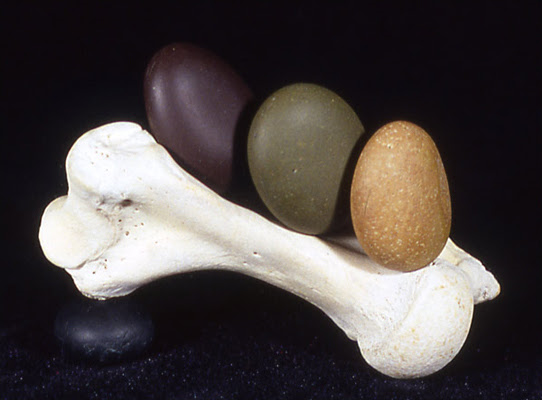
”We begin as a bundle of bones lost somewhere in a desert, a dismantled skeleton that lies under the sand. It is our work to recover the parts.” ~CP Estes

One moment she’d be enthralled with feeling her body move in ways she’d forgotten. Then she’d share with me the terror of falling, of fracturing, of spending her days in a body that could shatter like a bone china cup. And then return to the moment with a “Thank you for listening to my anxieties…”

And who would not be anxious? Our fear of falling is woven tightly into the fabric of our being. Yet, fall we will. It’s making friends with gravity and ourselves, that’s key.

As we worked together she bravely went to the ground with the help of a chair, a slow descent to a padded floor. She was terrified and confused. She wanted to do it “right”. But there is no right way to move: there’s the strategies we have in the moment. And strategies serve or we’d never develop them. It’s too much of a high wire act to ask someone in recovery to move “perfectly”. And what does “perfectly” mean? Who decides? I encouraged her to check in with her own sensation, her own inner experience. Women are particularly vulnerable to other peoples’ opinions about their body and experience. Our subjective experience has value. Equal value to any other input.We explored slowly. Some peoples’ pride is offended by the sometimes slow pace of this work: “I’m tough, I can do more!” They do know how to be tough, but they don’t know how to get from A—->B.

Healthy vulnerability is necessary for recovery. A wise mentor once said we move through life from dependence as young children, to independence as teenagers and then interdependence as emotionally mature adults.

When engaged in months or years of recovery, the willingness to receive support, accept our limits, and be vulnerable, keeps our humanity intact, our tasks do-able, and our spirits resilient. My friend and I continue our journey together: It offers her wholeness, not adaptive strategies. She’s driving, walking with hiking poles, tending her inner life, and also has her darker moments too. And she continues to be diligent with our work together. I see the day when she’ll walk round the lake near her home. Or come by for breakfast. Her life is forever altered. Her experience is a reminder that our body mediates our relationship with the world.

We need support for our confidence to grow “bone deep”.

That’s Not Normal

“That’s not normal….do you do yoga or something?!”

Once, while at a sporting goods store looking at a floor to ceiling wall of shoe inserts, I squatted down to get out of the way of others and get a better look at the merchandise.

As a stood up I heard a voice behind me: “That is not normal. Normal people cannot squat like that….” I laughed. I was so taken aback by his definition of “normal”. I turned around to see two people who looked rather oddly at me– like I was an escapee from the circus. Then they talked aloud to each other while I stood between them. “Would they choose a flexible body or a flexible mind?” Hmmm. Interesting that they thought they had to choose.

One of the pithy ideas that Moshe Feldenkrais put forth is: If we have only one way of doing something, we have compulsion, two ways, a dilemma, three ways, more possibility. Our options begin to open up.

Do you notice this insightful little ditty can apply to either body or mind? If we can change our minds about what is normal, we can also change our movement. Because movement begins with how we perceive ourselves. With gentleness and awareness we can begin to appreciate how we organize our whole self around what limits us and then begin open to what’s possible. That’s the essence of a flexible mind and a flexible body.

In your own life, what do you assume is “normal”–where could there be greater possibility? Do you have the support you need to open to what’s possible? What do you need?